Paint at your own pace • Seated & home-friendly
Painting Lessons
made simple & joyful.
Short, friendly lessons that take you from your very first brushstroke to a finished painting you can be proud of. No fancy words, no pressure — just clear steps, plenty of practice time, and ideas that work even on tired-hand days.
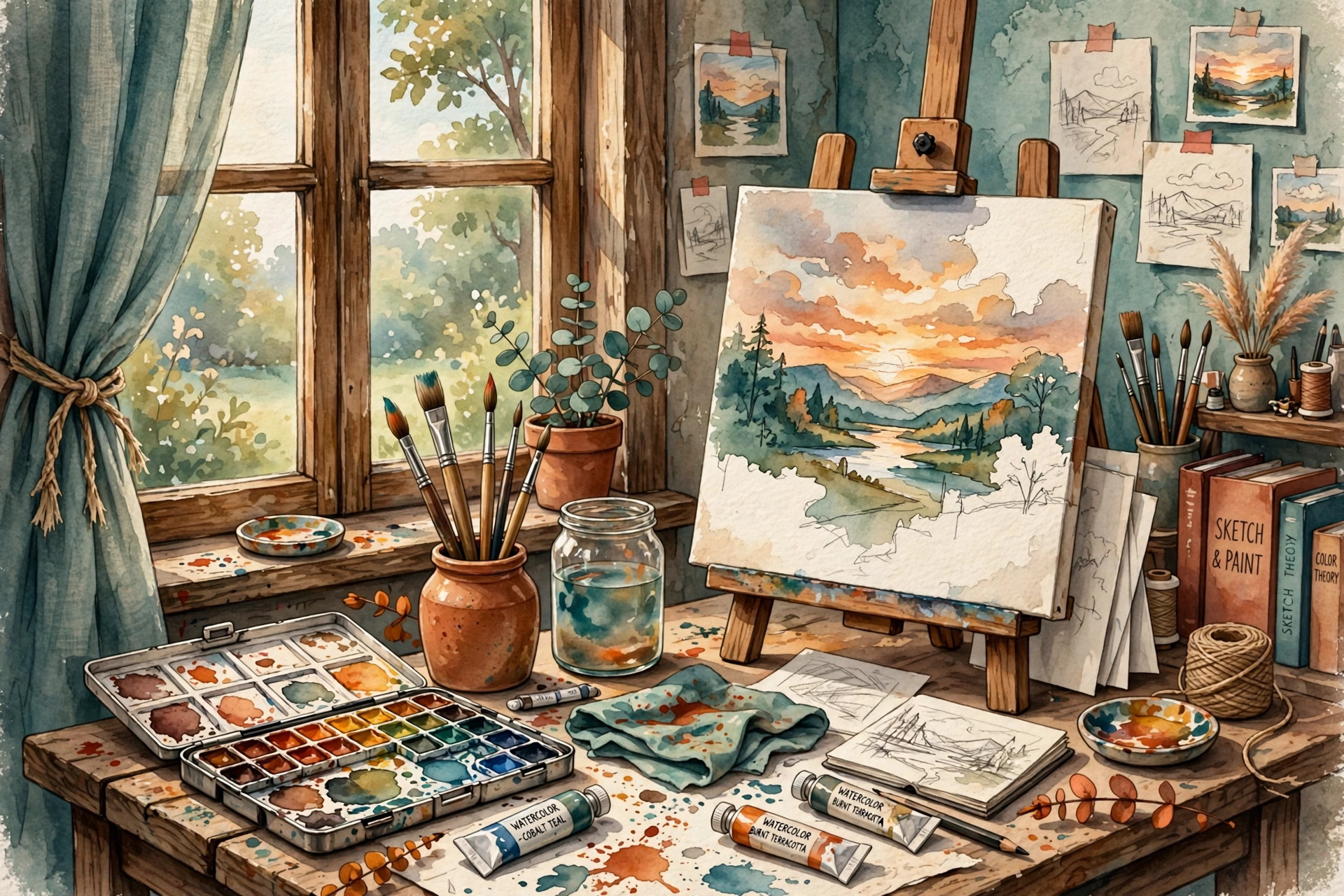
Most lessons take 15–30 minutes. Sit, relax, and take breaks whenever you need.
Your painting journey
Finish lessons to fill your bar. Every small step counts.
Your 8-lesson path
Work through them in order, or jump to whatever sounds fun today. Tap “Mark done” when you finish — your checkmarks stay while this page is open.
Practice Studio
A simple digital canvas to try strokes, colors, and ideas before you use real paint. Works with mouse or finger.
Your canvas
Ready — pick a color and paintTip for sore hands: use a thicker brush size and make bigger, looser strokes. Loose is beautiful — it does not have to be perfect.
Color Lab — mix without the mud
Pick any two colors and see what they make. Slide to use more of one color. This is the same idea as mixing real paint on a palette.
Mix two colors
Paint recipes that always work
Real-world mixes for skies, skin, leaves, and cozy neutrals. Try them in the mixer on the left.
Tint, tone & shade — the easy way
Pick a base color and see how it changes. Tint = add white. Shade = add black. Tone = add gray. This is how you make colors look soft, deep, or dusty without buying more paint.
Brush Guide — what each brush does
You do not need a big set. Three good brushes can do almost everything. Here is how to pick and hold them kindly.
Kind-to-hands tips
Wrap a hair tie or foam grip around the handle. It makes the brush easier to hold without squeezing hard.
Press lightly for thin lines, a little firmer for thick ones. You do not need to push hard — paint flows on its own.
Every 10 minutes, set the brush down, stretch your fingers wide, then make gentle fists. Warm water feels lovely too.
Supplies & everyday tips
Start small and cheap. You can paint beautifully with a short list — no need to buy everything at once.
Starter kit — watercolor
- Pan watercolor set (12–24 colors) — student grade is perfect to learn with.
- Watercolor paper, 140 lb / 300 gsm — thicker paper will not buckle as much.
- Two jars of water — one to rinse, one clean for mixing.
- Round brush size 6 and size 10 — they come to a point and hold lots of water.
- Paper towel or soft cloth — to blot extra water.
- Painter's tape — tape edges for a clean white border.
Starter kit — acrylic
- Acrylic paints: titanium white, mars black, ultramarine blue, crimson, yellow ochre, burnt sienna.
- Canvas boards or thick paper — easier to store than stretched canvas when you are starting.
- Flat brush 8, round brush 4, filbert 6 — covers skies, details, and soft edges.
- Stay-wet palette or a plate with damp paper towel — keeps paint from drying too fast.
- Cup of water + rag — acrylic washes out with water while wet.
- Apron or old shirt — dried acrylic does not wash out of fabric.
Questions beginners ask a lot
My colors look muddy. What am I doing wrong?
Nothing is wrong — mud is part of learning. It usually means too many colors mixed while wet. Use 2–3 colors at a time, rinse your brush often, and let a layer dry before painting over it. A little mud can also be a lovely neutral for shadows and tree trunks.
Watercolor vs. acrylic — which should I start with?
Watercolor is light, tidy, and dries fast — lovely for soft skies and loose flowers. Acrylic is bold, forgiving (you can paint over mistakes), and great for strong color. Many beginners start with whichever they already own. Both are wonderful.
How long should I practice?
Even 10–15 minutes counts. Short, regular sessions teach your hands more than one long tiring session. Stop when your hands or eyes feel tired — you will remember more and enjoy it more tomorrow.
My hands get sore. Any ideas?
Use larger brushes, thicker handles, and bigger paper so you can make arm movements instead of tiny finger movements. Keep sessions short, take stretch breaks, and try painting at a slight angle on a table easel instead of flat.